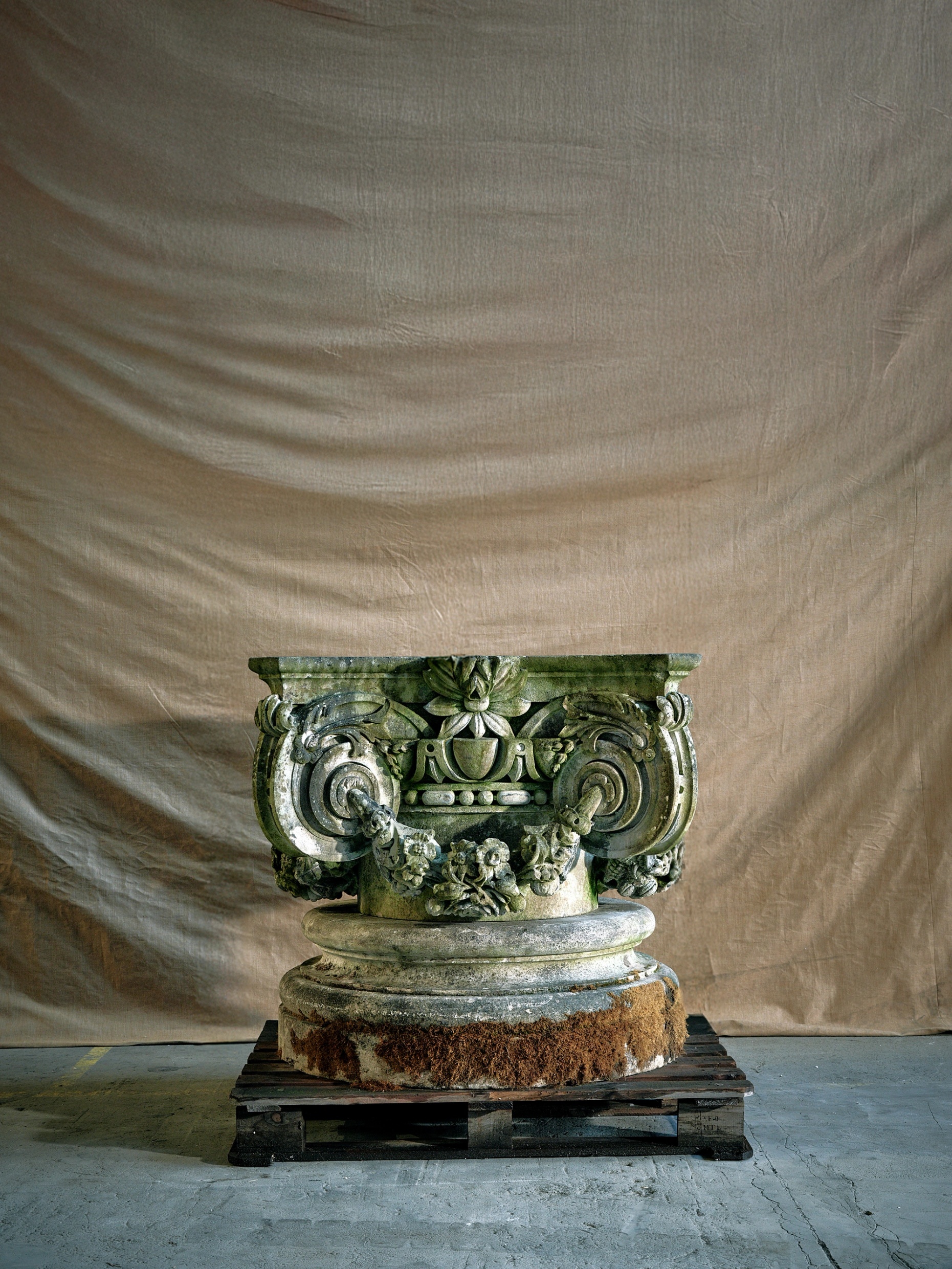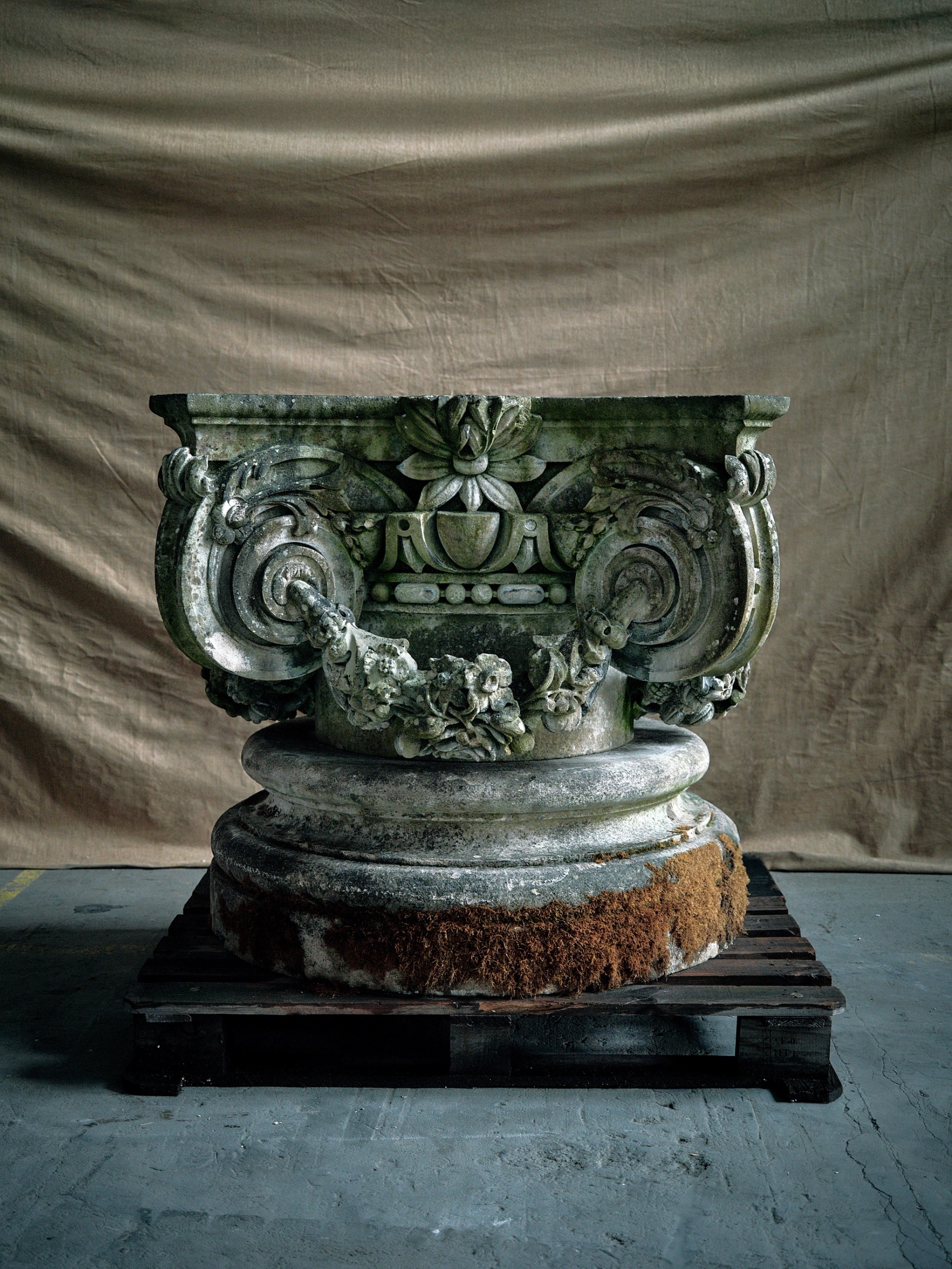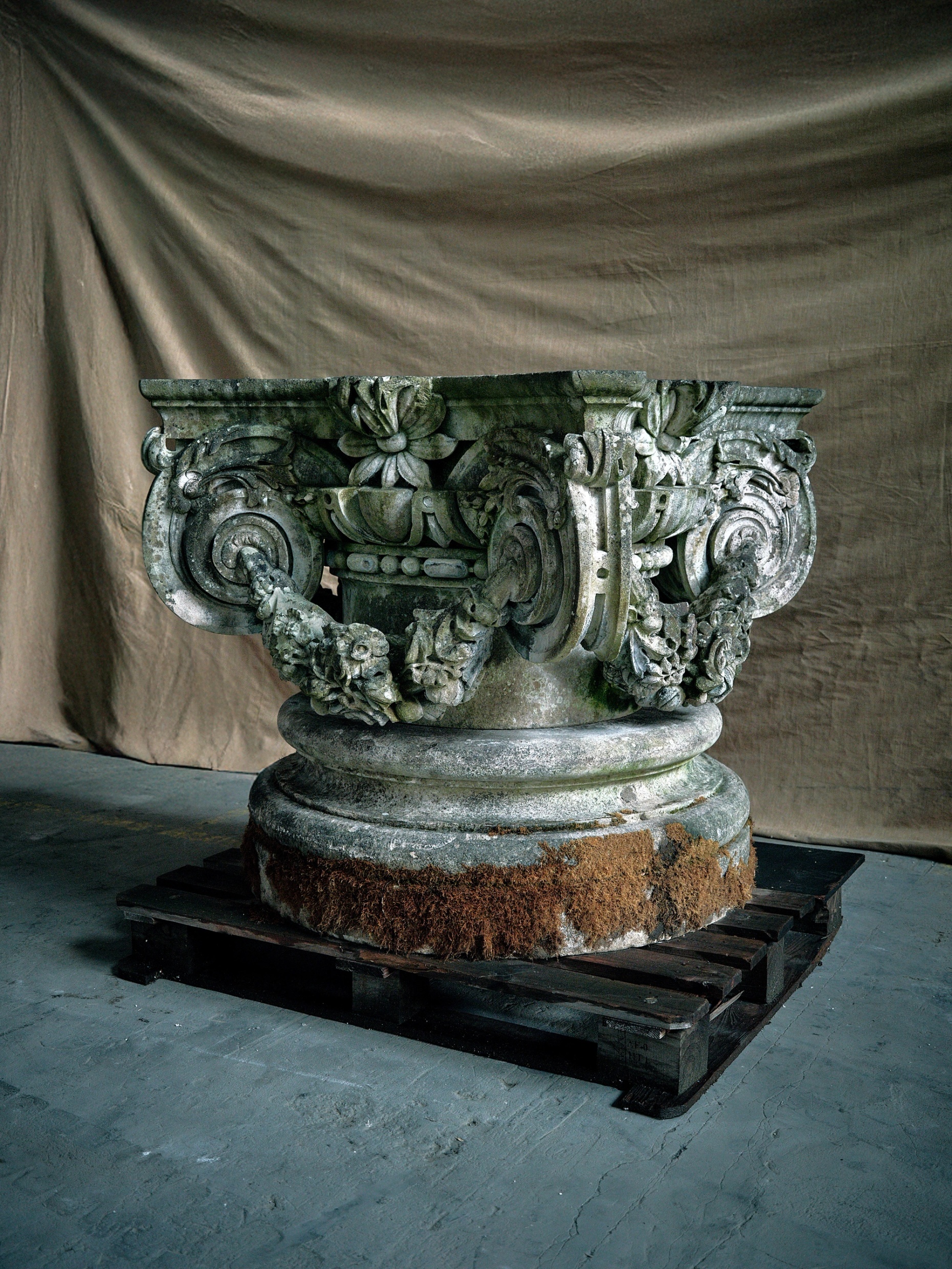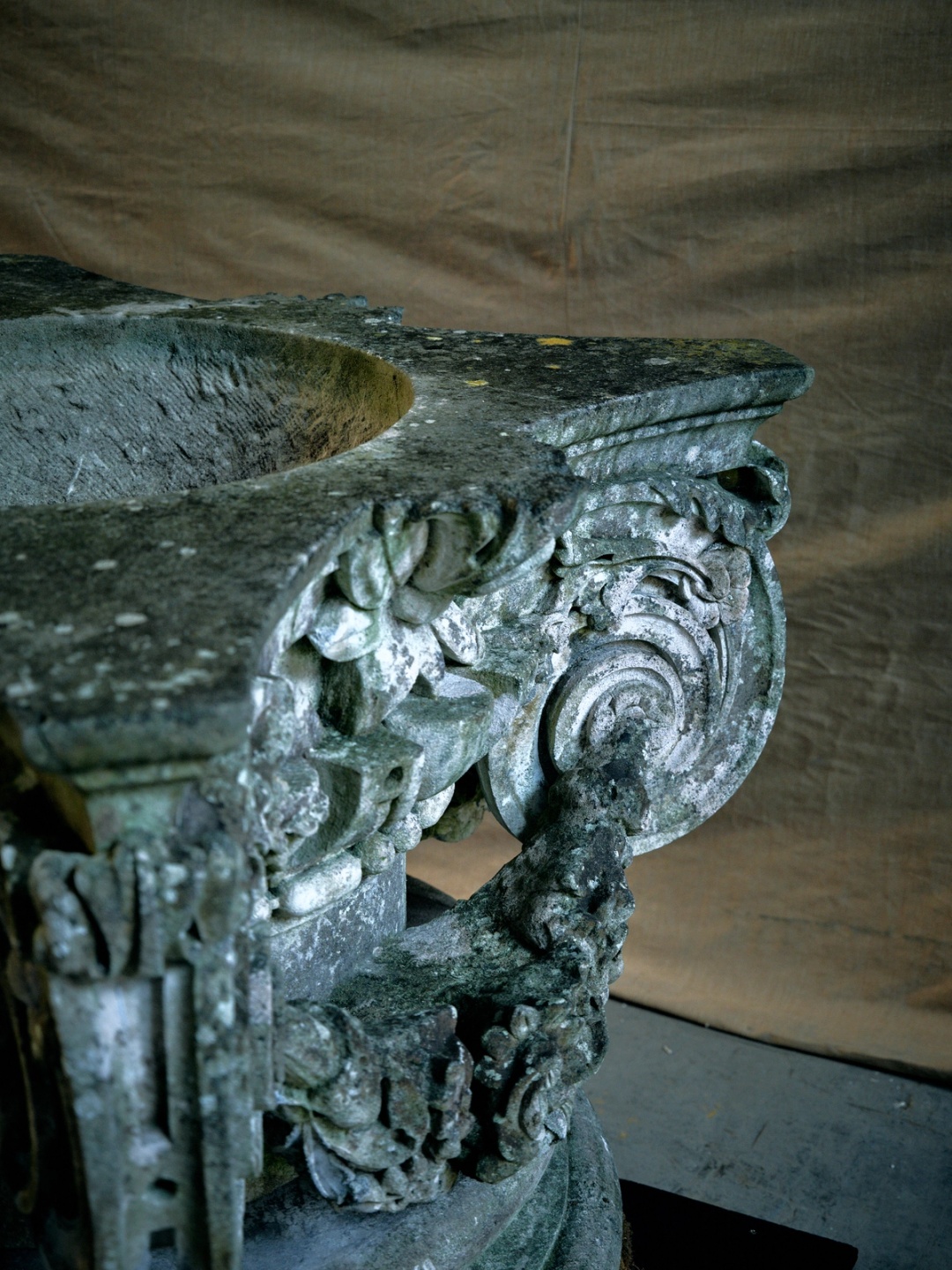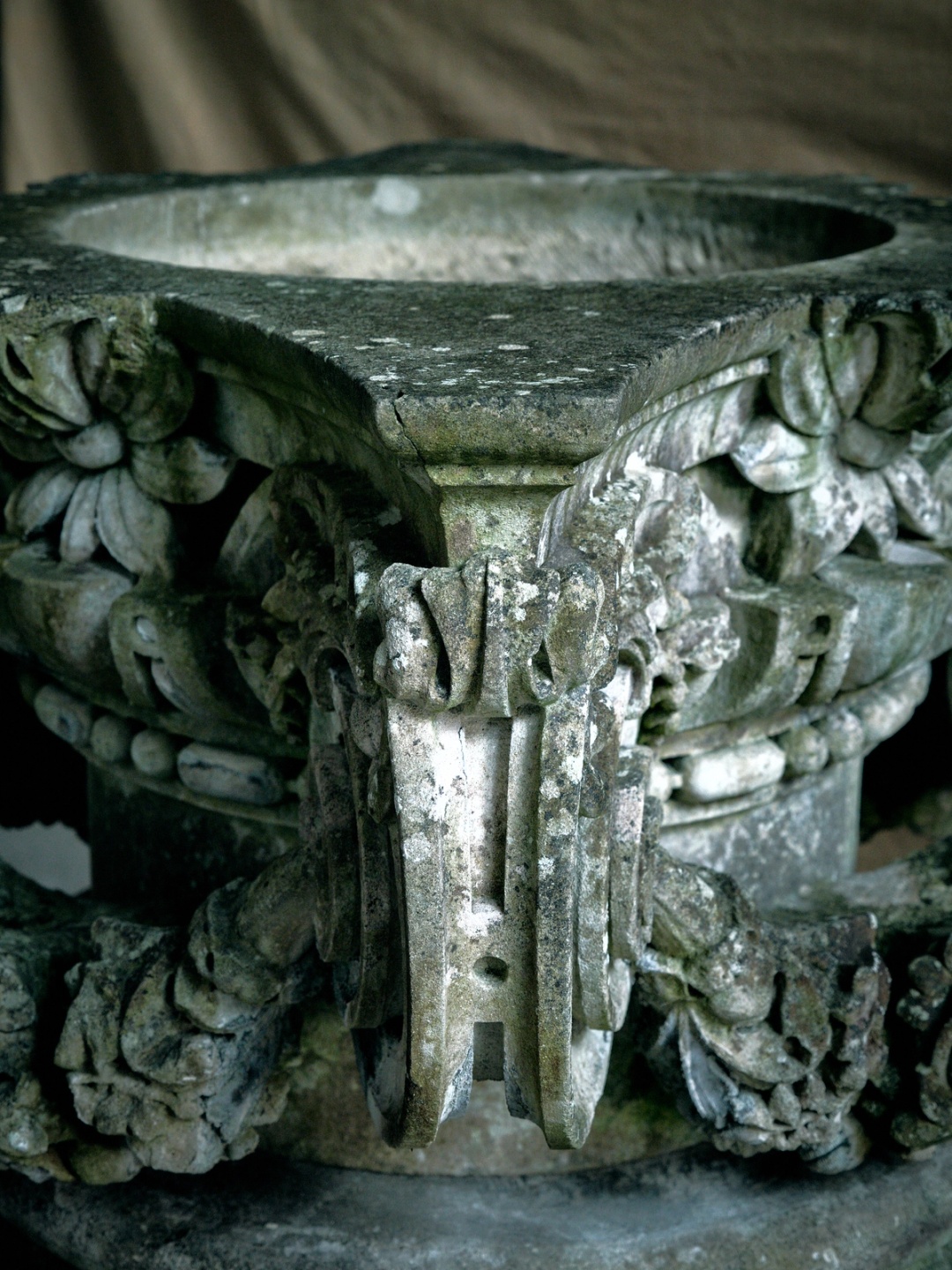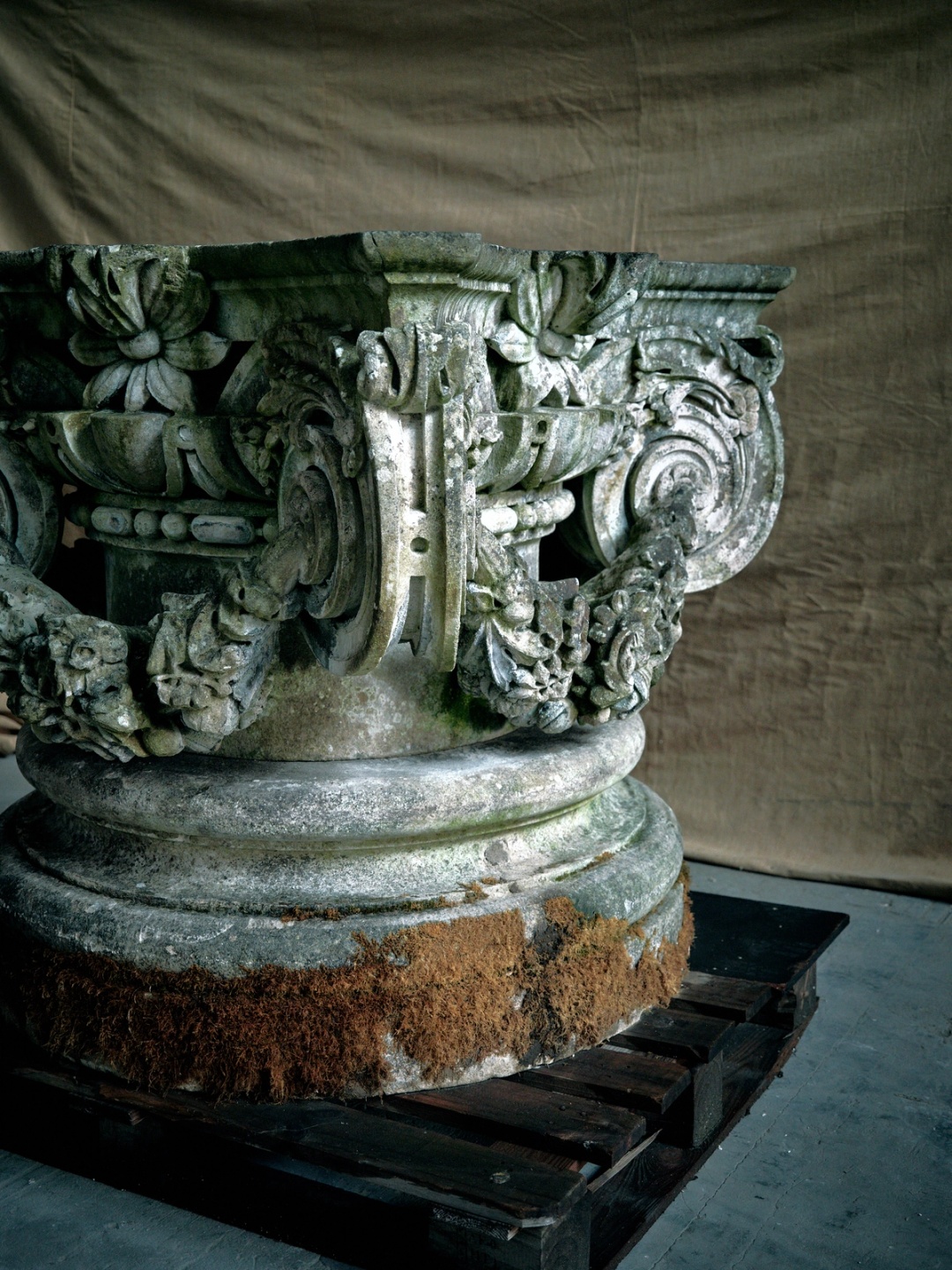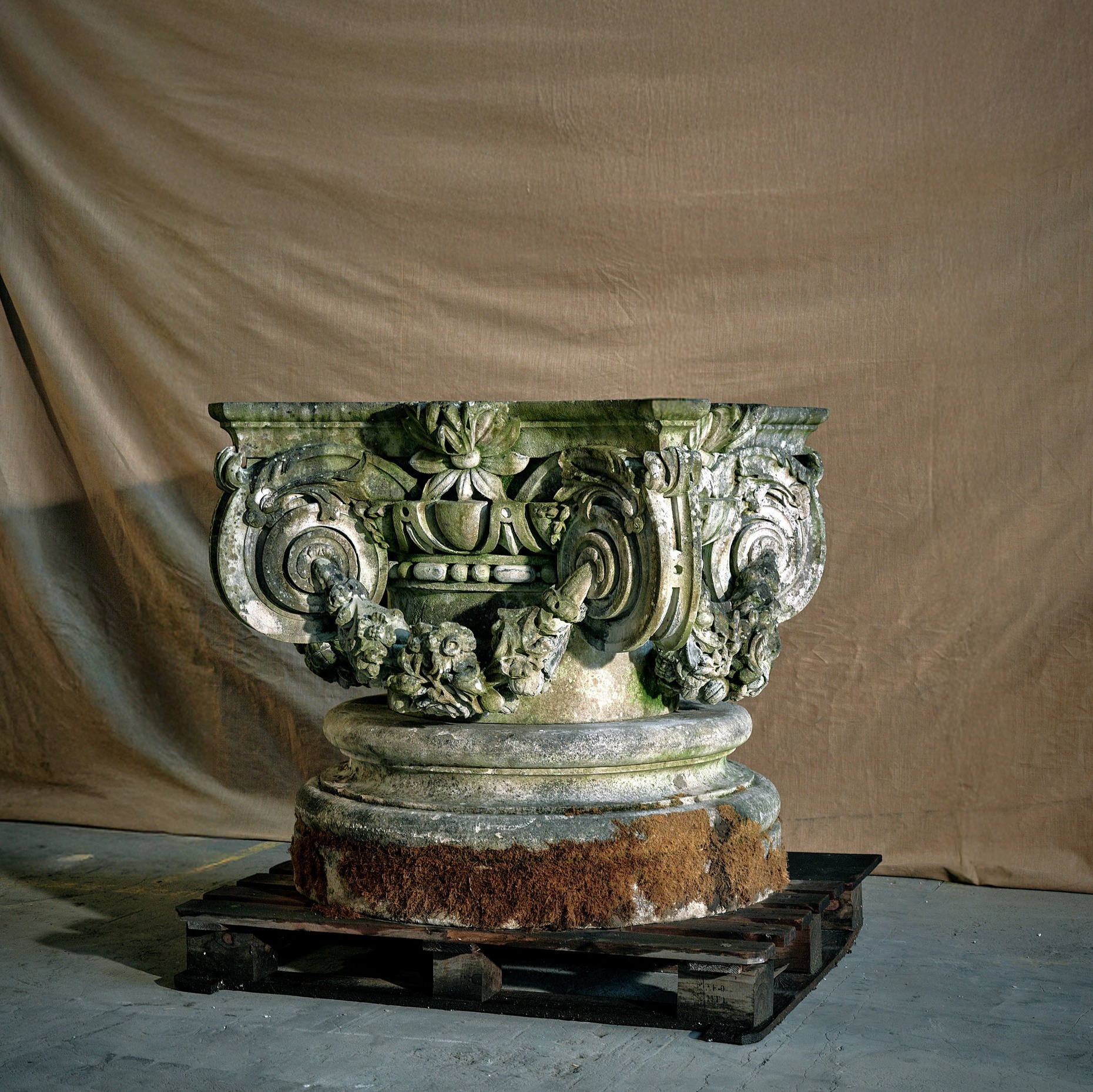
A Monumental carved limestone 'Scamozzi' Ionic Capital, 18th century
A highly important, monumental, well-carved and detailed 'Scamozzi' capital on a waisted socle, most likely taken from an 18th century substantial and impressive work of neo-classical architecture. Pleasingly wearing mossy growth commensurate with extended time outside.
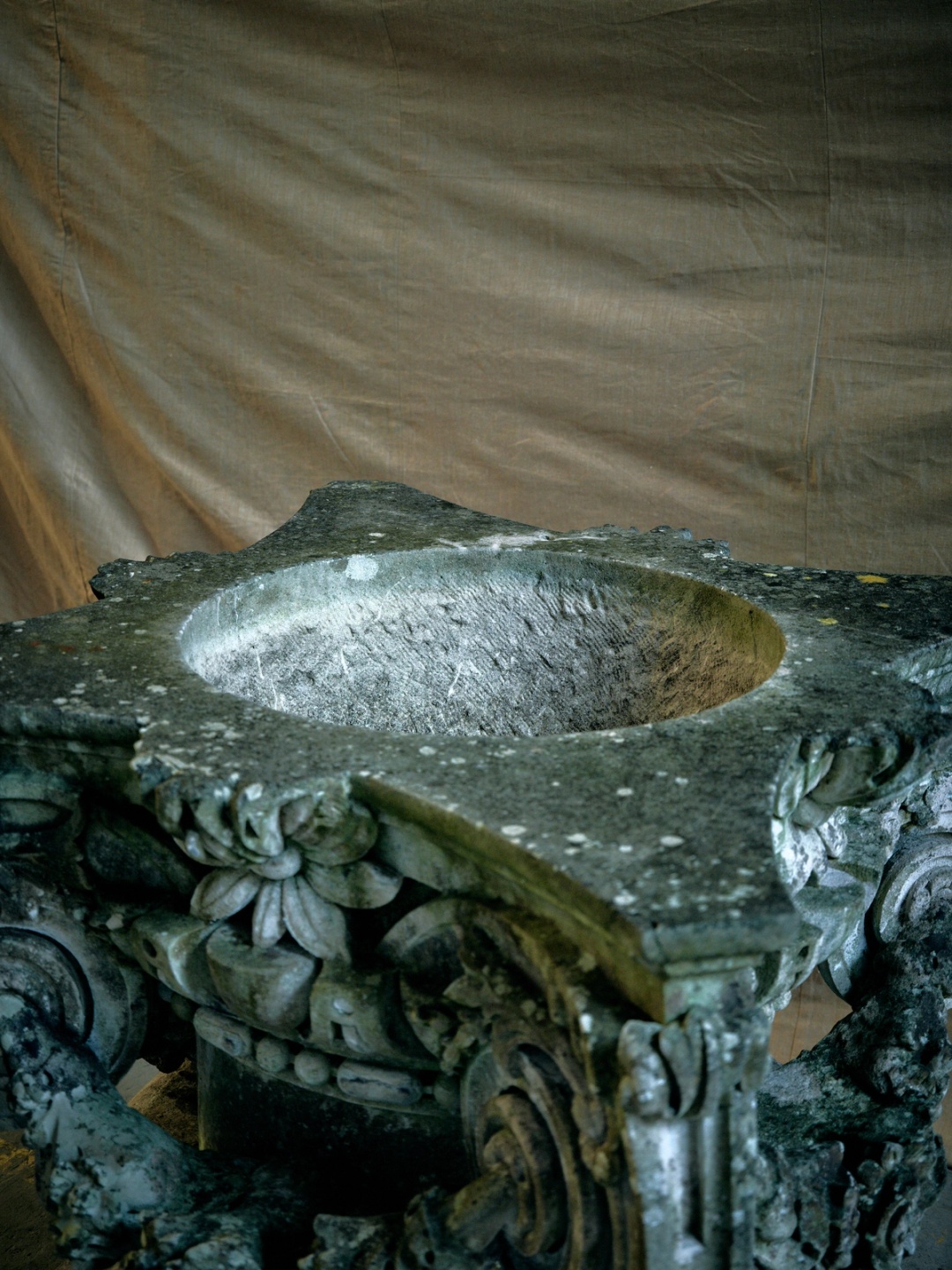
This capital follows the 19th century precedent of reconstructing planters using architectural elements removed from historically important buildings. It belongs to that romantic notion of embedding components from derelict structures, and it is a reference to the long-lasting tradition of repurposing antique Roman fragments within modern buildings, as a way of preserving these throughout the centuries.
The refined details of the festoons reveal that this capital was designed to be seen from below: originally carved to surmount a column, it most likely supported the portico of a Neoclassical large scale building. A similar example are the capitals of the Bank of England, a magnificent structure designed by Sir John Soane in the early 19th century and demolished in 1920s. Similarly to the present case, the Neoclassical capitals originally placed in the Lothbury courtyard of the bank were later converted to monumental planters.
Vincenzo Scamozzi (1552-1616) was a disciple of Palladio, and he is most known for reinterpreting the Ionic capital, which he illustrated in his book 'L'Idea dell'architettura Universale'. Differently from the Palladio's version, his capital shows the four volutes at 45 degrees from the centre, creating in this way four equal faces. First of all Inigo Jones, and consequently most English Palladian architects, very much welcomed his version, and made great use of it in major country houses and buildings designed during the early Georgian period.
The style of the present capital, embellished with a festoon, is Baroque, strongly reminding of those in the porch at Sant'Andrea al Quirinale in Rome by Bernini, and suggesting that its origins could be continental, either Italian or possibly French.
Ref: 6082
Make an enquiry via email here.
Call:+44 (0) 20 7730 2122
View all Antiques here.